you like modern art research

Sacred geometry, symbol and the inner life

Visual research board · Islamic and sacred geometry, Sufism, Carl Jung, Symbolism, Georgian (both senses) · November 2026

Five traditions, read for what they do visually and how each can be built with: in architecture, painting, sculpture, graphic design and writing. Each section shows the work, names the operating principles, then turns them into concrete design moves. A cross-reference table and a reading list (classical literature, philosophy, esoteric books) follow.

"Georgian" is read both ways: the country of Georgia (Caucasus: stone churches, its own alphabet, Rustaveli, Gurdjieff's Tiflis) and Georgian Britain (1714 to 1830: Palladian proportion, Freemasonry, Blake). Both connect to the rest of the board, in different ways.

The shared grammar

Across all five, the same few ideas keep turning up as form. These are the moves that carry from one tradition to another and from one medium to another.

  1. The center. Everything is organized around one point: the dome's apex, the mandala's core, the dervish's axis, the Simurgh. A design that has a true center reads as whole.
  2. Circle meets square. Heaven and earth, spirit and matter. Islamic builders literally solve it in the squinch and muqarnas (square room to round dome); Jung called the squared circle "the archetype of wholeness"; Georgian churches lift a drum and dome over a square bay.
  3. Many from one. One compass opening, one tile set, one module generates unlimited variation. Unity is shown, not stated.
  4. Light as material. Screens, mirror mosaic, gold ground, pierced domes. Light is the sacred element that ornament exists to break up and reveal.
  5. The path. Seven valleys, seven heavens, alchemical stages, four ages of life. Meaning is sequenced: a building, a book or a series is a journey.
  6. Writing as image. Kufic, asomtavruli, illuminated margins, Mallarmé's page. The letter is ornament and the ornament is text.
Eight-point star (khatam) from one circle: two squares, one rotated 45°. The seed of most Islamic eightfold patterns; drawn with compass and straightedge alone.
Cross-quartered circle with inscribed square. Jung's "reconciling symbol", carved into the pavement of his Bollingen tower and onto his family tombstone.
1 2 3 4 5 6 7 8 9
Enneagram as Gurdjieff taught it: circle, triangle 9-3-6 and the hexad 1-4-2-8-5-7 (the decimal of 1/7). Origin claims (Sufi or otherwise) are contested.
circle 1:1 1:√2 3:4 2:3 3:5 1:2
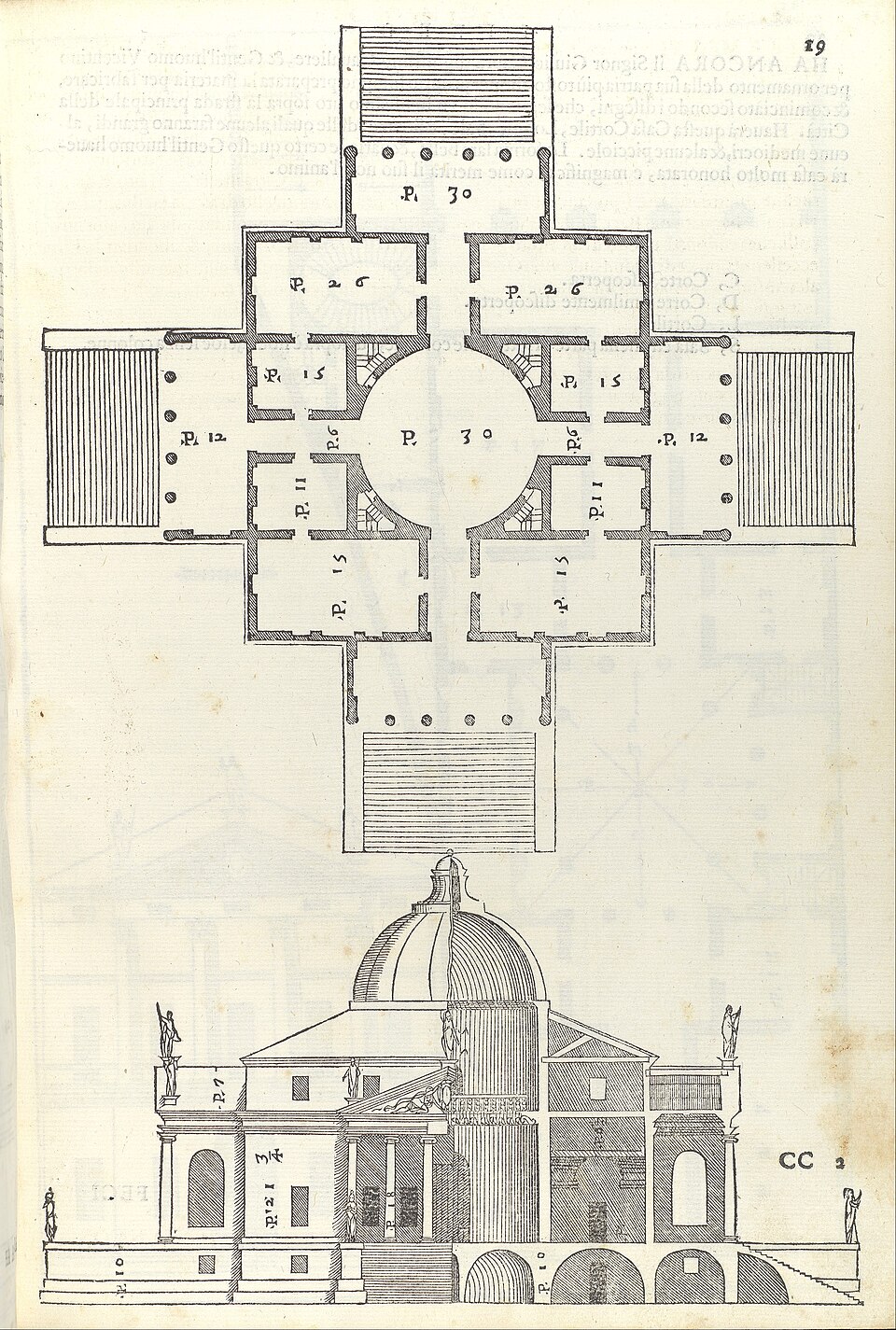
Palladio's seven room proportions (Quattro Libri, 1570), the backbone of Georgian British rooms: circle, square, 1:√2, 3:4, 2:3, 3:5, 1:2. The same ratios are musical intervals, which is why Renaissance and Georgian theory treated rooms as harmonies.

1. Islamic art and sacred geometry
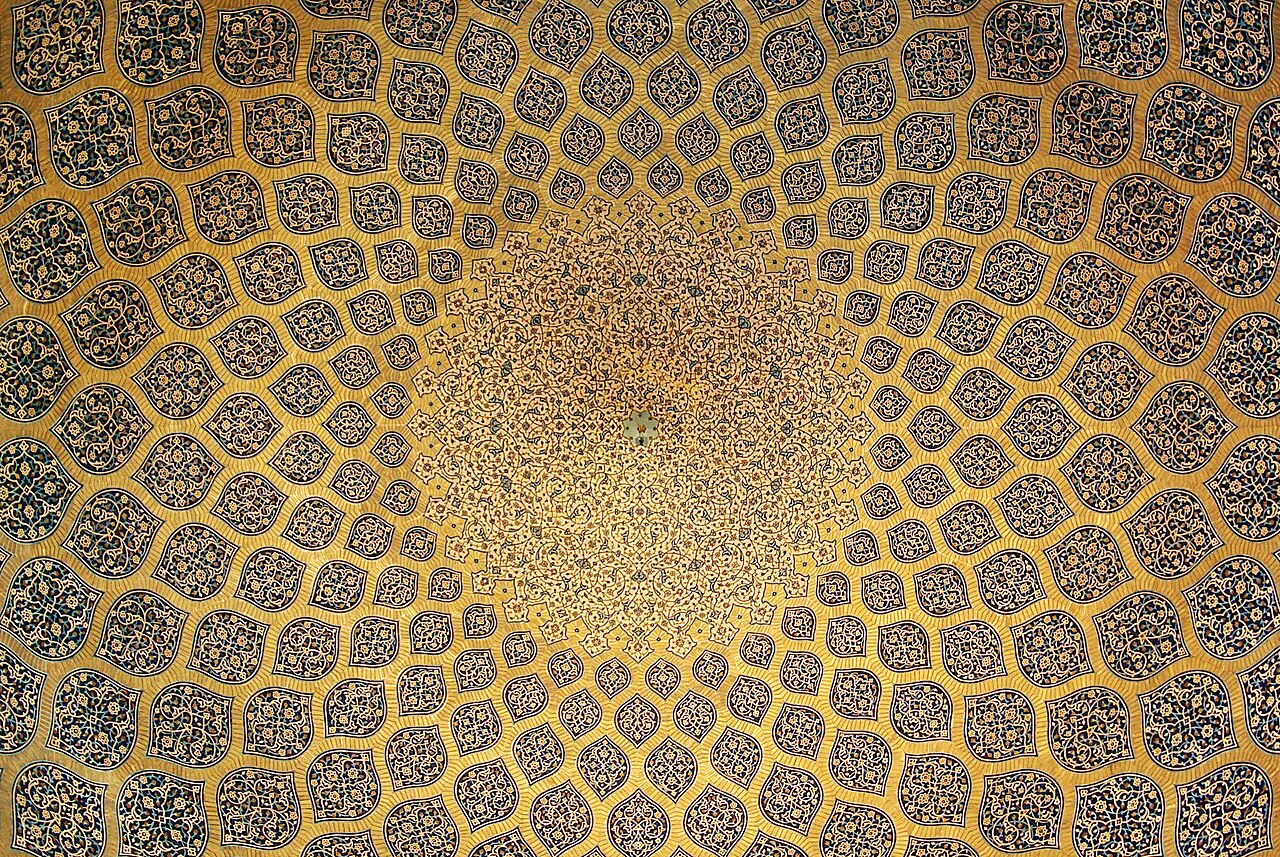
Sheikh Lotfollah Mosque, Isfahan (1603 to 1619)
Sheikh Lotfollah Mosque, Isfahan (1603 to 1619): the dome as a field of lozenges shrinking toward a single sunburst center.
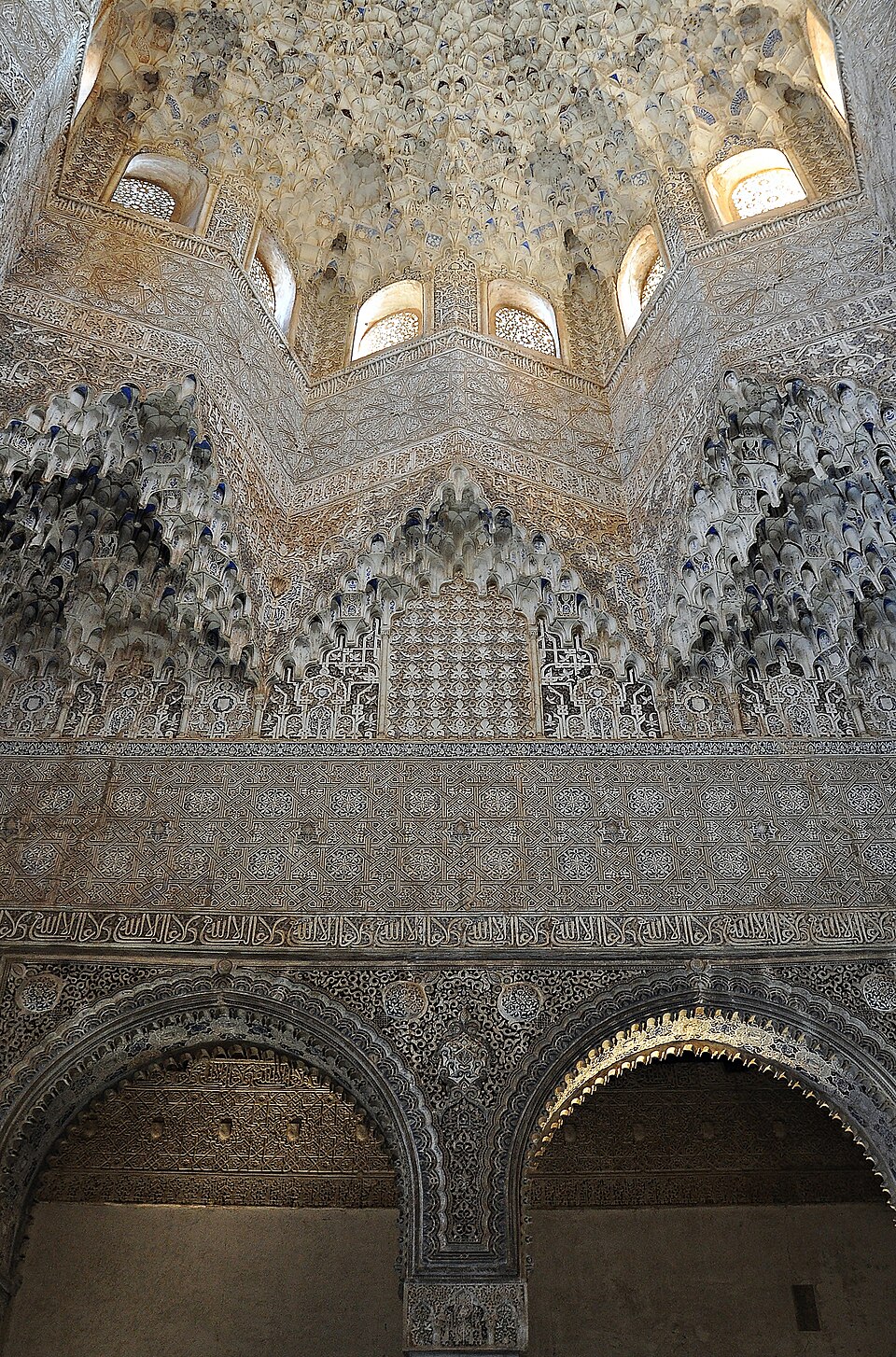
Hall of the Abencerrajes, Alhambra (14th c
Hall of the Abencerrajes, Alhambra (14th c.): muqarnas, thousands of small cells turning a square room into a star-vault.
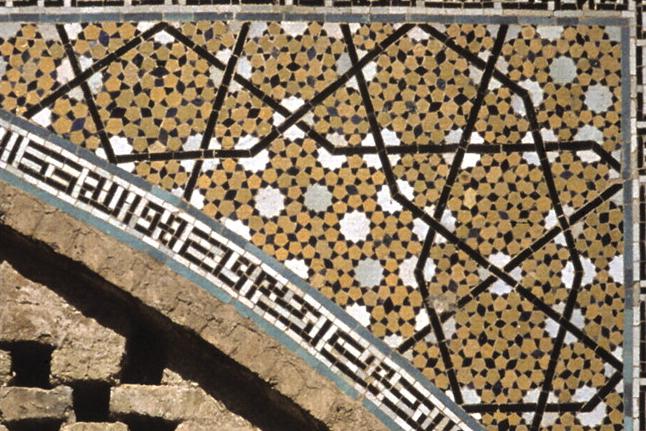
Darb-i Imam, Isfahan
Darb-i Imam, Isfahan: two-level girih, a large pattern with a smaller pattern inlaid in its tiles.
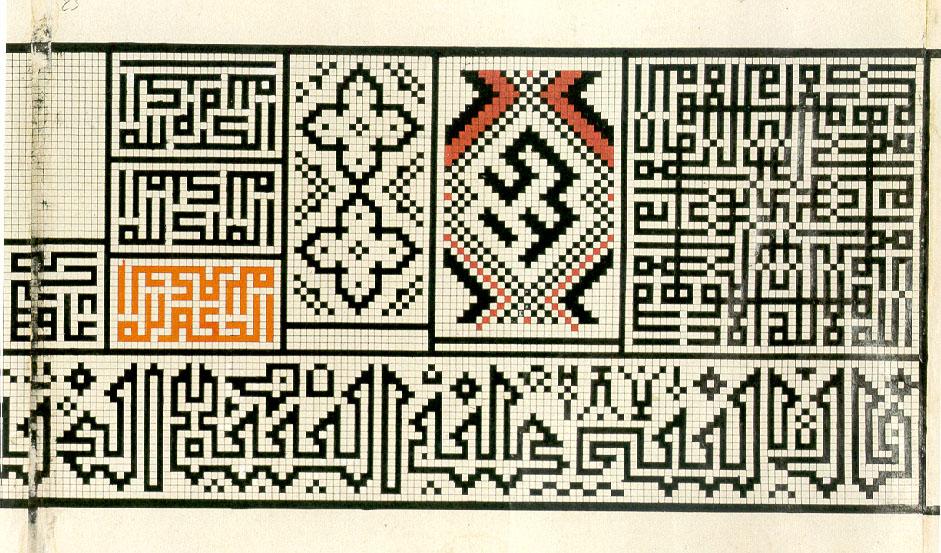
Topkapi Scroll (late 15th to 16th c
Topkapi Scroll (late 15th to 16th c.): a builder's pattern book, construction lines drawn in red under the finished design.
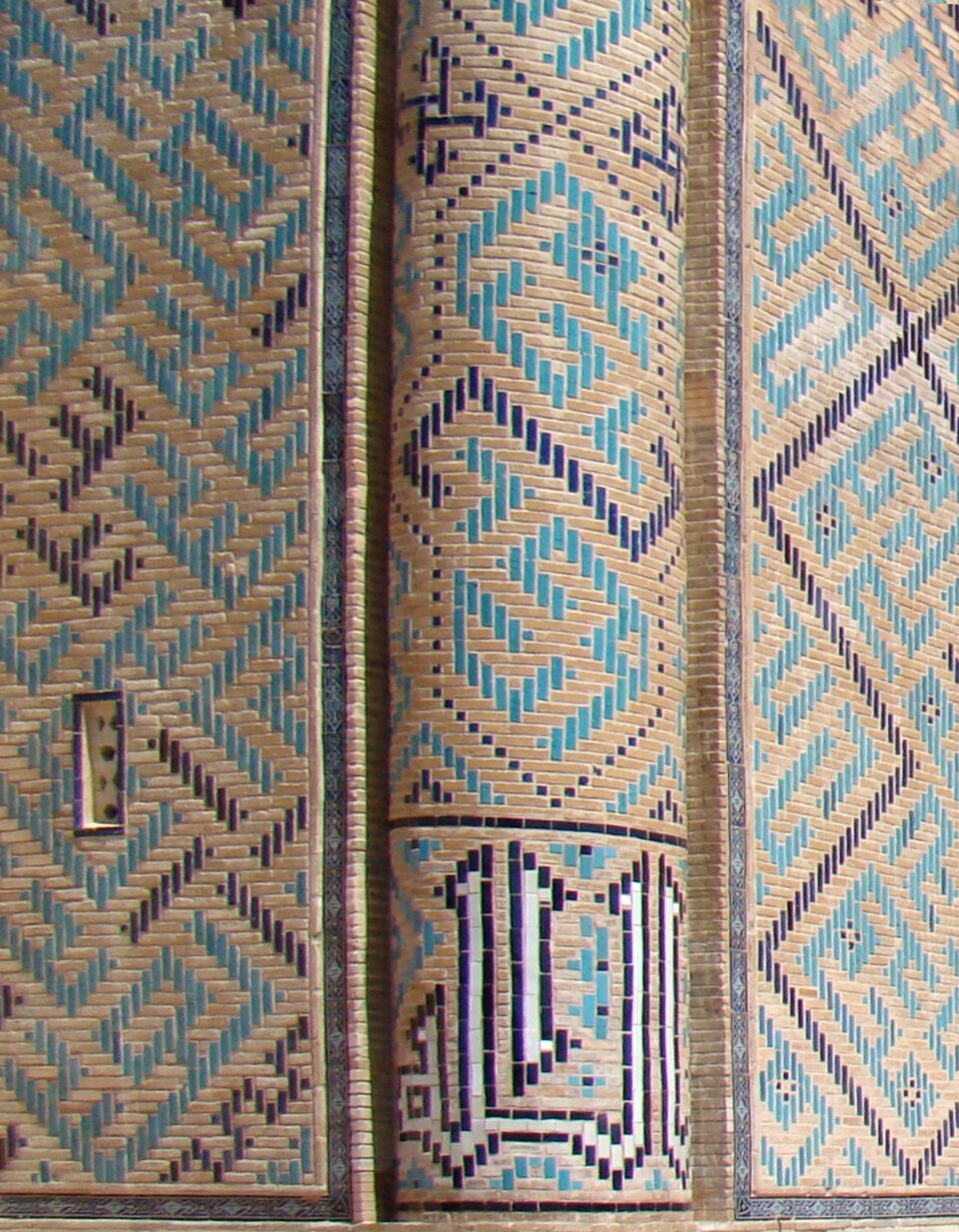
Banna'i brickwork
Banna'i brickwork: square Kufic built from glazed brick units. The letter is literally a module, an ancestor of pixel type.
I
I. M. Pei, Museum of Islamic Art, Doha (2008): geometry distilled to massing; Pei cited the fountain of the Ibn Tulun mosque in Cairo.

What it is doing

Design moves

Architecture
Plan the transition zone (square to circle) as the moment of drama. Treat screens (mashrabiya, jali) as light-tuning devices, as Jean Nouvel did with 25,000 motorized camera-shutter apertures at the Institut du Monde Arabe, Paris (1987). Use courtyards and fountains as the center.
Painting
Flat, all-over fields with no single vanishing point. Monir Shahroudy Farmanfarmaian (1922 to 2019) shows the modern route: Safavid mirror-craft plus Minimalist seriality, building works around a central polygon whose number carries meaning.
Sculpture
Modular relief and cast screens; muqarnas as a 3D tiling problem (now very approachable with CNC or 3D printing). Reflective and pierced surfaces so the piece is completed by light.
Graphic design
Build a pattern library the way the girih set works: five components, strict edge rules, unlimited layouts. Square Kufic as a grid-locked logotype or wordmark. Strapwork as a frame system. Let patterns bleed off the page edge.
Writing
Ring composition and recurring refrains (the Qur'an's own structure, the ghazal's radif) as the verbal equivalent of a repeating unit.
2. Sufism

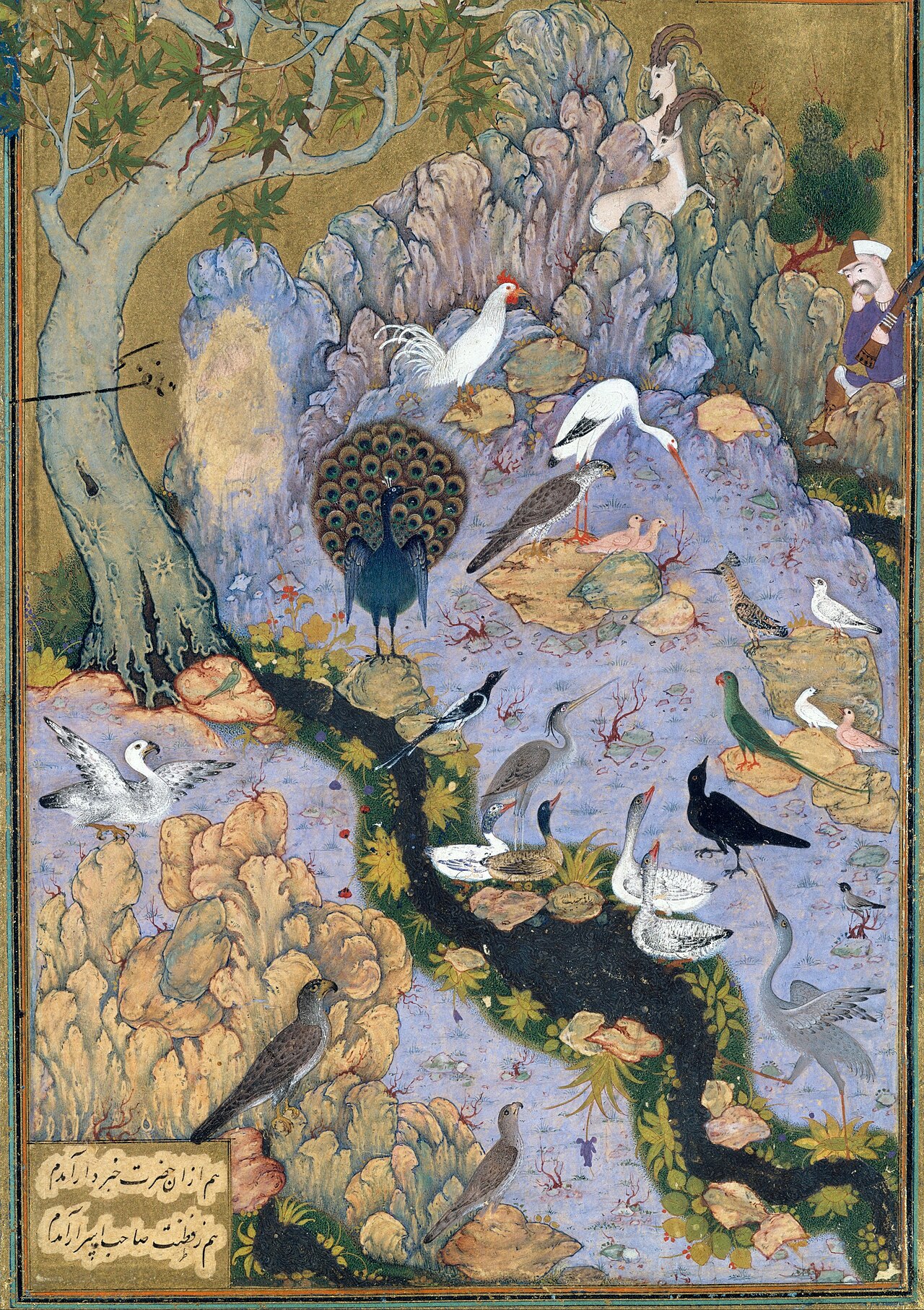
"The Concourse of the Birds", from Attar's Mantiq al-tair (Met manuscript of 1487; this folio by Habiballah of Sava, about 1600)
"The Concourse of the Birds", from Attar's Mantiq al-tair (Met manuscript of 1487; this folio by Habiballah of Sava, about 1600). The hoopoe gathers the birds for the journey to the Simurgh.
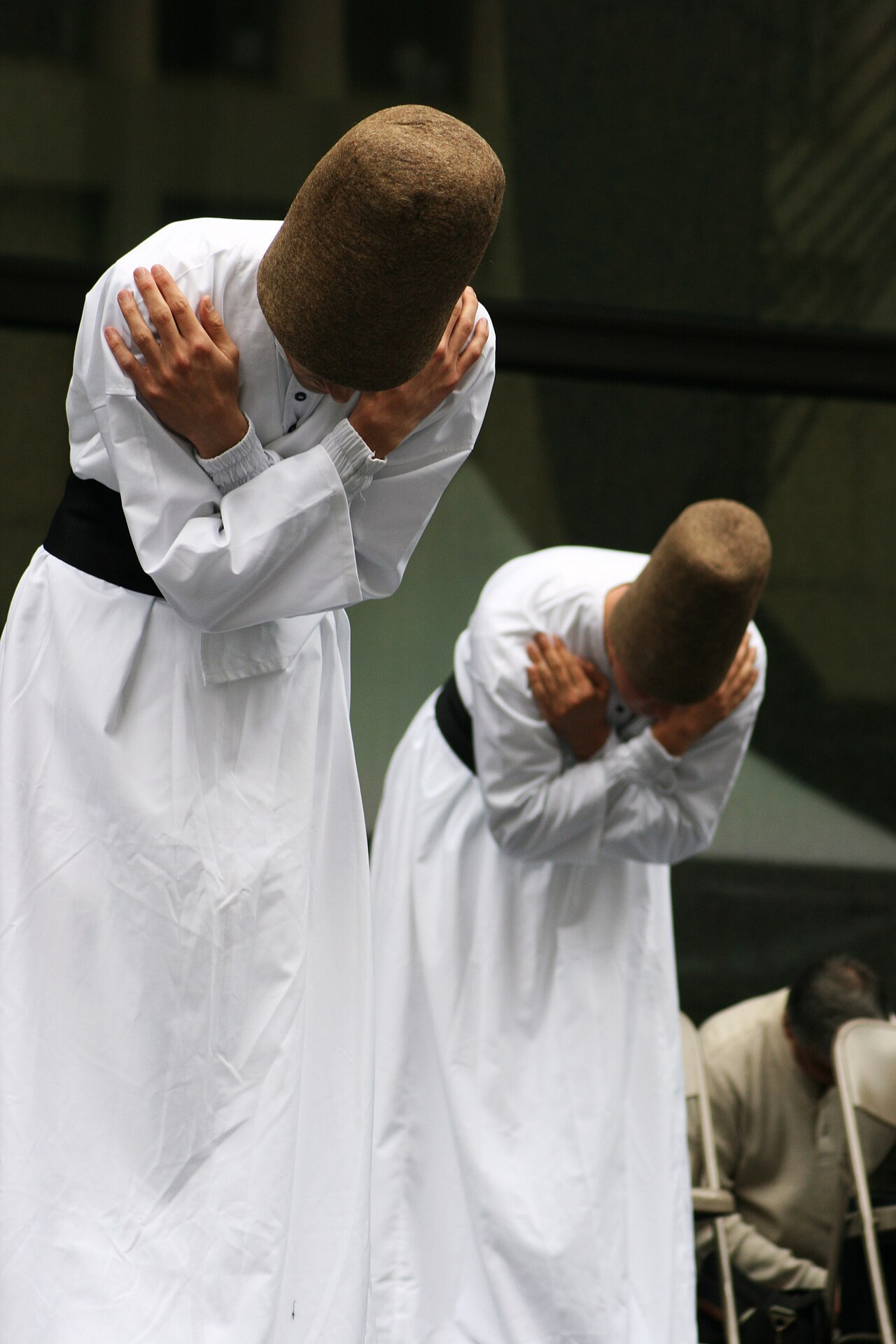
Mevlevi sema, the turning ceremony
Mevlevi sema, the turning ceremony. Each dervish turns on his own axis while the group orbits the hall.
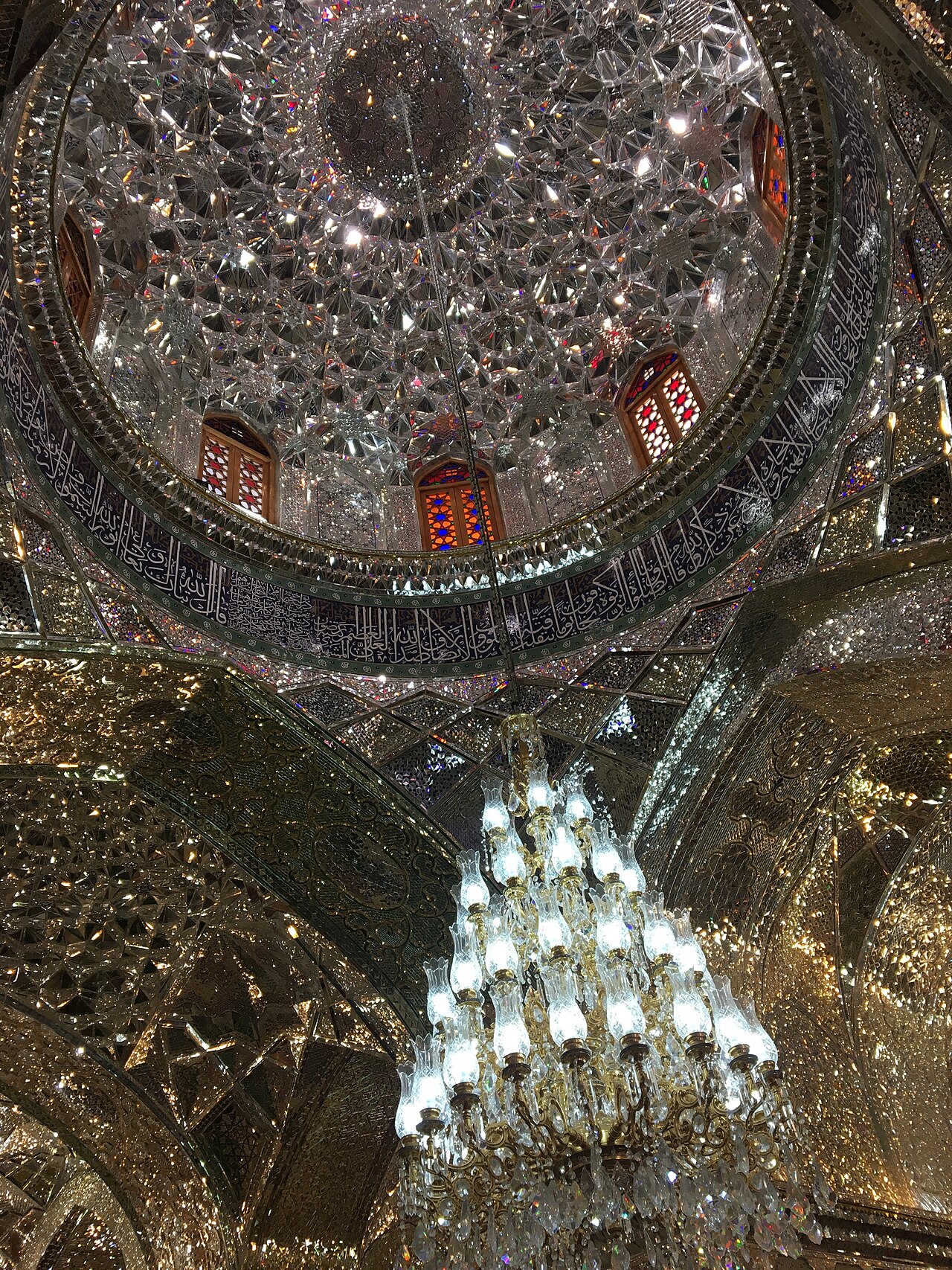
Shah Cheragh shrine, Shiraz
Shah Cheragh shrine, Shiraz: aina-kari mirror mosaic. The surface dissolves into points of light; Monir Farmanfarmaian named this visit as formative.

What it is doing

Design moves

Architecture
Design the approach as stages (Attar's seven valleys: quest, love, gnosis, detachment, unity, wonder, poverty and annihilation). Sequence thresholds, compression and release, ending in a centered, lit room. Round or centralized rooms for gathering.
Painting
Persian miniature space: many viewpoints at once, a high horizon, a jeweled flat field, text blocks inside the image. Paintings as riddles to be decoded slowly (the Timurid majlis tradition).
Sculpture
Rotation and orbit: kinetic or turning pieces, figures defined by an axis. Mirror as medium.
Graphic design
Circular layouts with a void center; type set on a spiral or around a circle; the frame-within-frame of Persian manuscripts (text block, gold rules, illuminated margin).
Writing
Frame narrative with nested teaching stories (Masnavi, Conference of the Birds). The ghazal: autonomous couplets held by a refrain, unity without linear plot.

3. Carl Jung

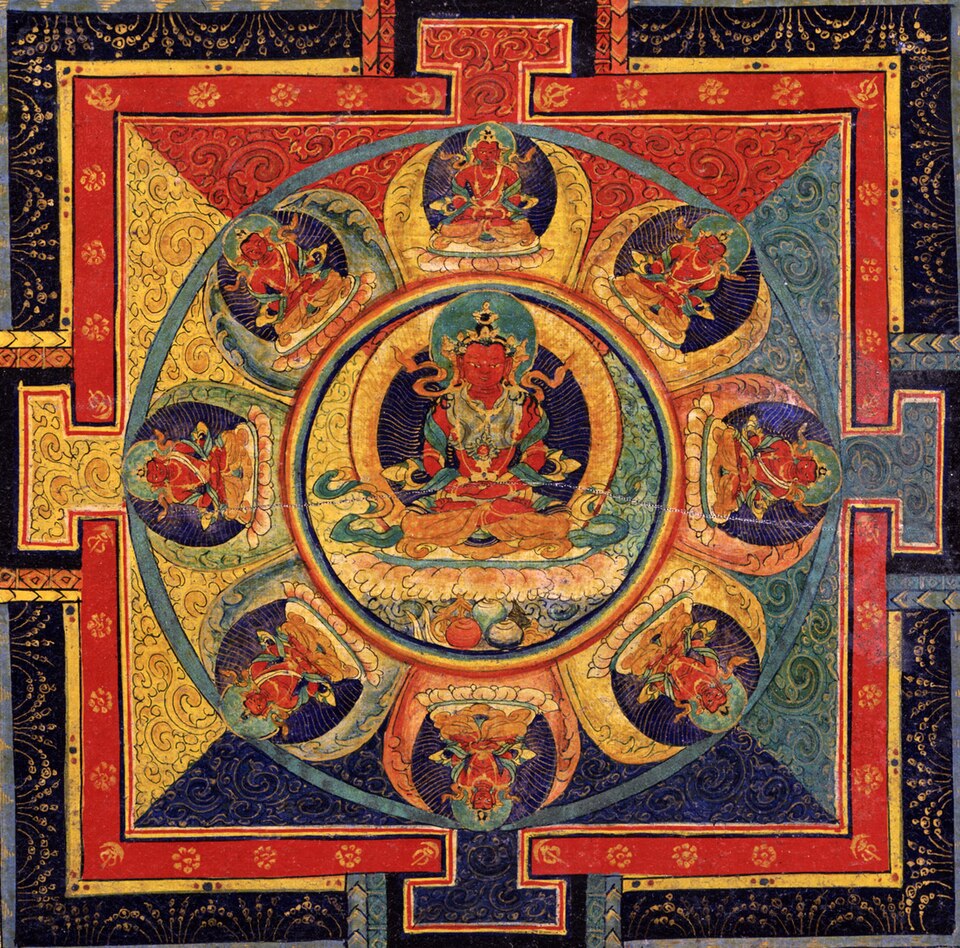
Tibetan Amitayus mandala (19th c
Tibetan Amitayus mandala (19th c.). Jung saw the mandala as a world symbol of the self and compared his patients' drawings to Tibetan examples.
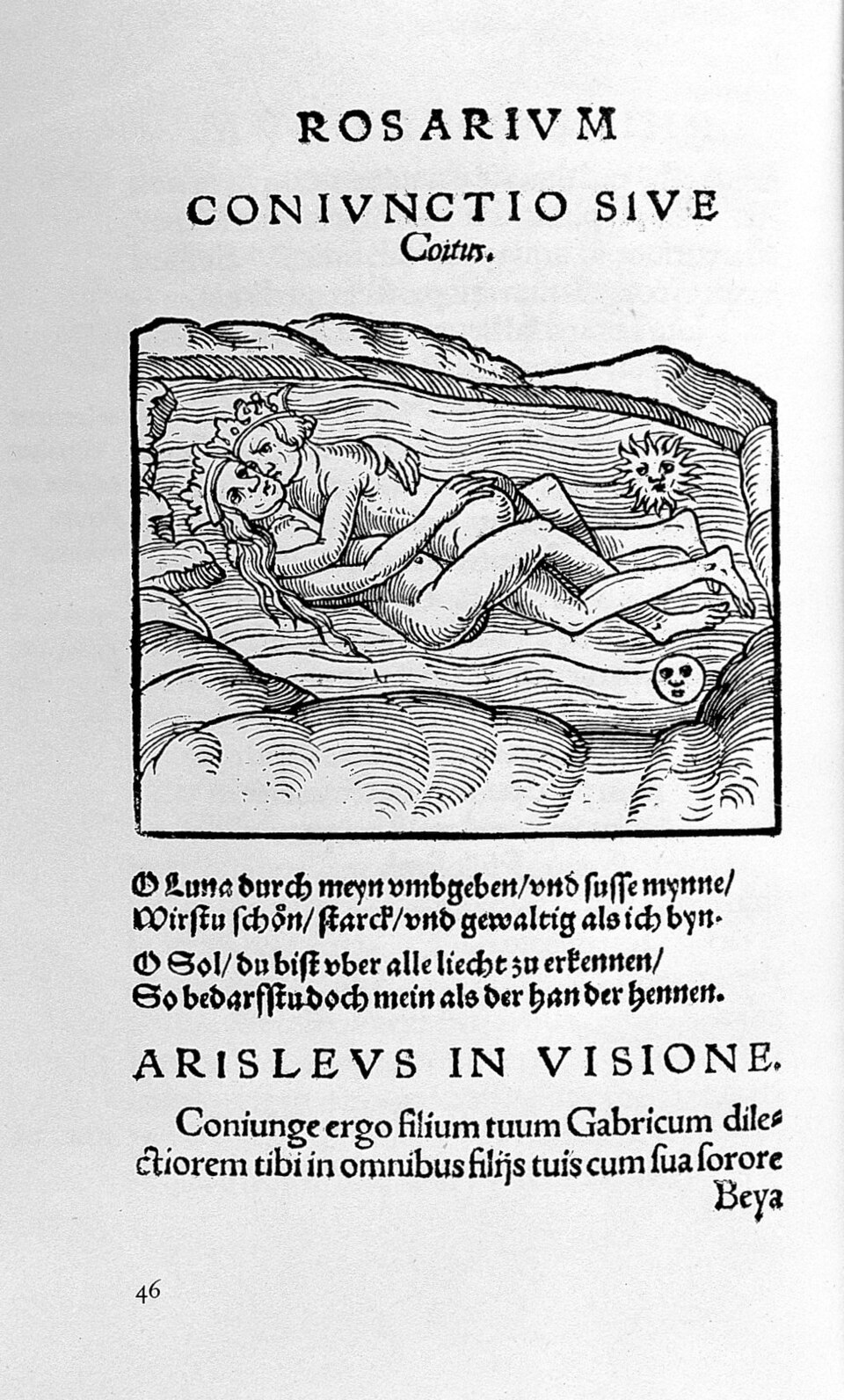
Rosarium philosophorum (1550)
Rosarium philosophorum (1550). Jung built "The Psychology of the Transference" (1946) on its woodcut series.
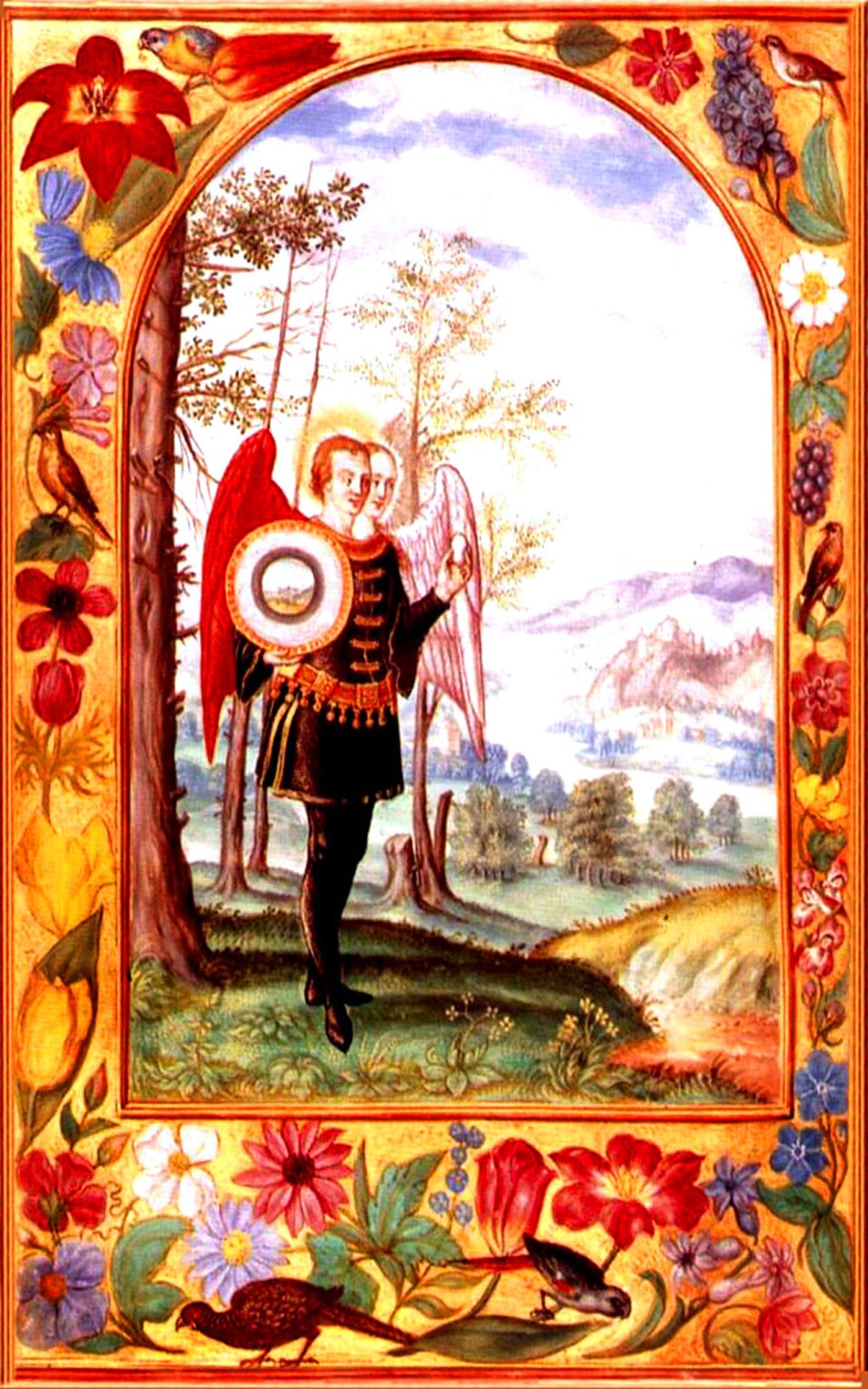
Splendor Solis (1582)
Splendor Solis (1582): alchemy as a sequence of images. Jung read alchemy as a projected map of psychological transformation.
Bollingen Tower on Lake Zurich, begun 1923 and extended until 1955
Bollingen Tower on Lake Zurich, begun 1923 and extended until 1955: "a representation in stone of my innermost thoughts".

What it is doing

Design moves

Architecture
A building that accretes over time; a round tower or primitive core as the oldest, most private room. Carved inscriptions placed for the owner, not the public. Orientation of floor geometry to door and hearth.
Painting
Daily small circular studies as a practice. Use the four alchemical colors as a palette and sequence. Work in series where each piece is one stage.
Sculpture
Carving as a dialogue with the material: Jung's 1950 Bollingen stone, with Telesphorus at the center of a carved mandala and inscriptions on several faces.
Graphic design
Emblem-book logic: one image, one motto, one short text (the Rosarium format). Illuminated-manuscript layouts for long personal texts. Archetypal figures as a character system for a brand or editorial world.
Writing
Active imagination as a writing method: dialogue with figures as they appear (Philemon in the Red Book). The hero's descent and return as a structure.

The Red Book paintings and Jung's own mandalas are still under copyright (Jung died in 1961), so they are not reproduced here. The Red Book and The Art of C. G. Jung (2019) are the place to look; the Library of Congress Red Book exhibition is online.

4. Symbolism and esoteric abstraction

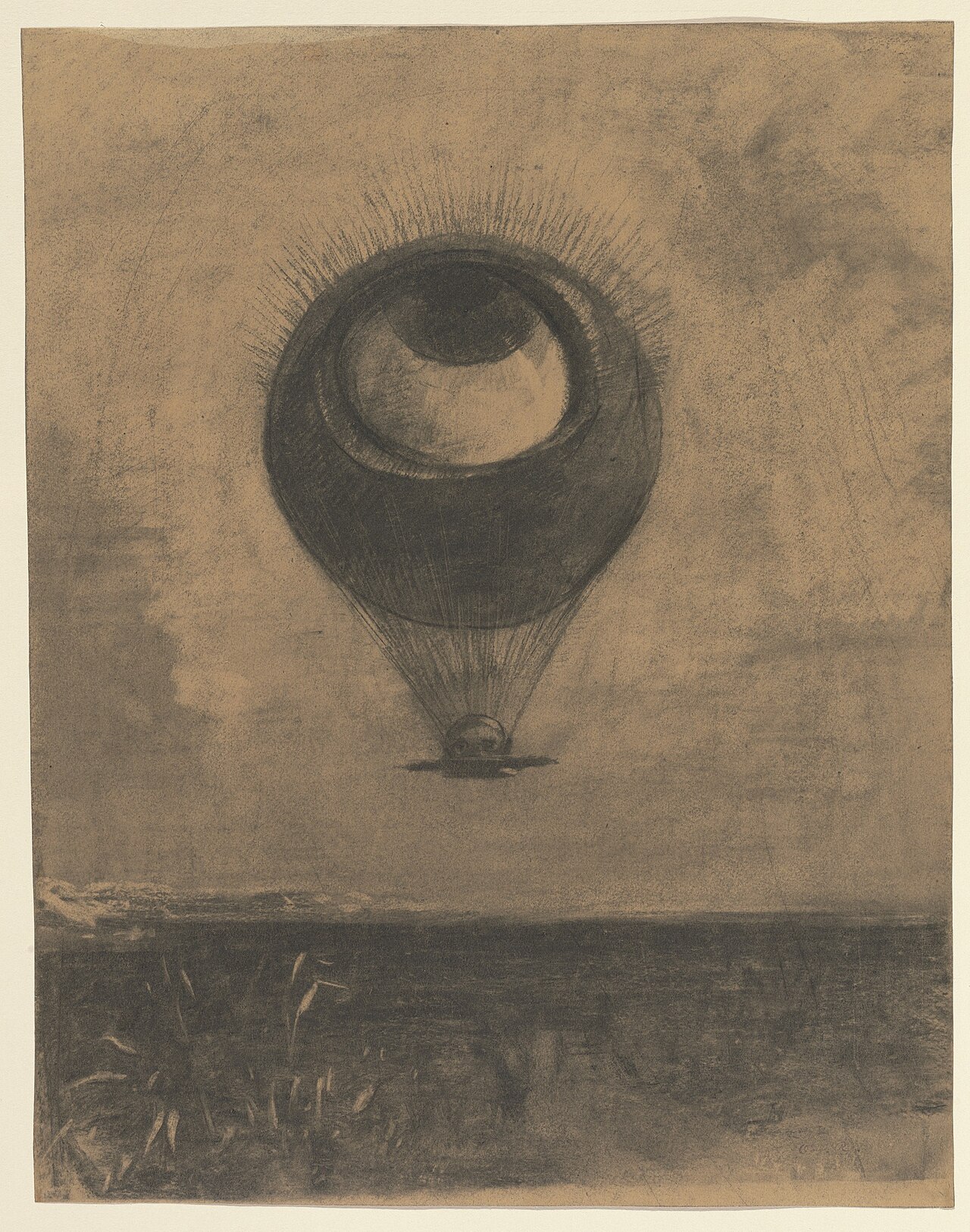
Odilon Redon, "Eye-Balloon" (1878)
Odilon Redon, "Eye-Balloon" (1878). The image as a dream fragment: suggestion, not description.
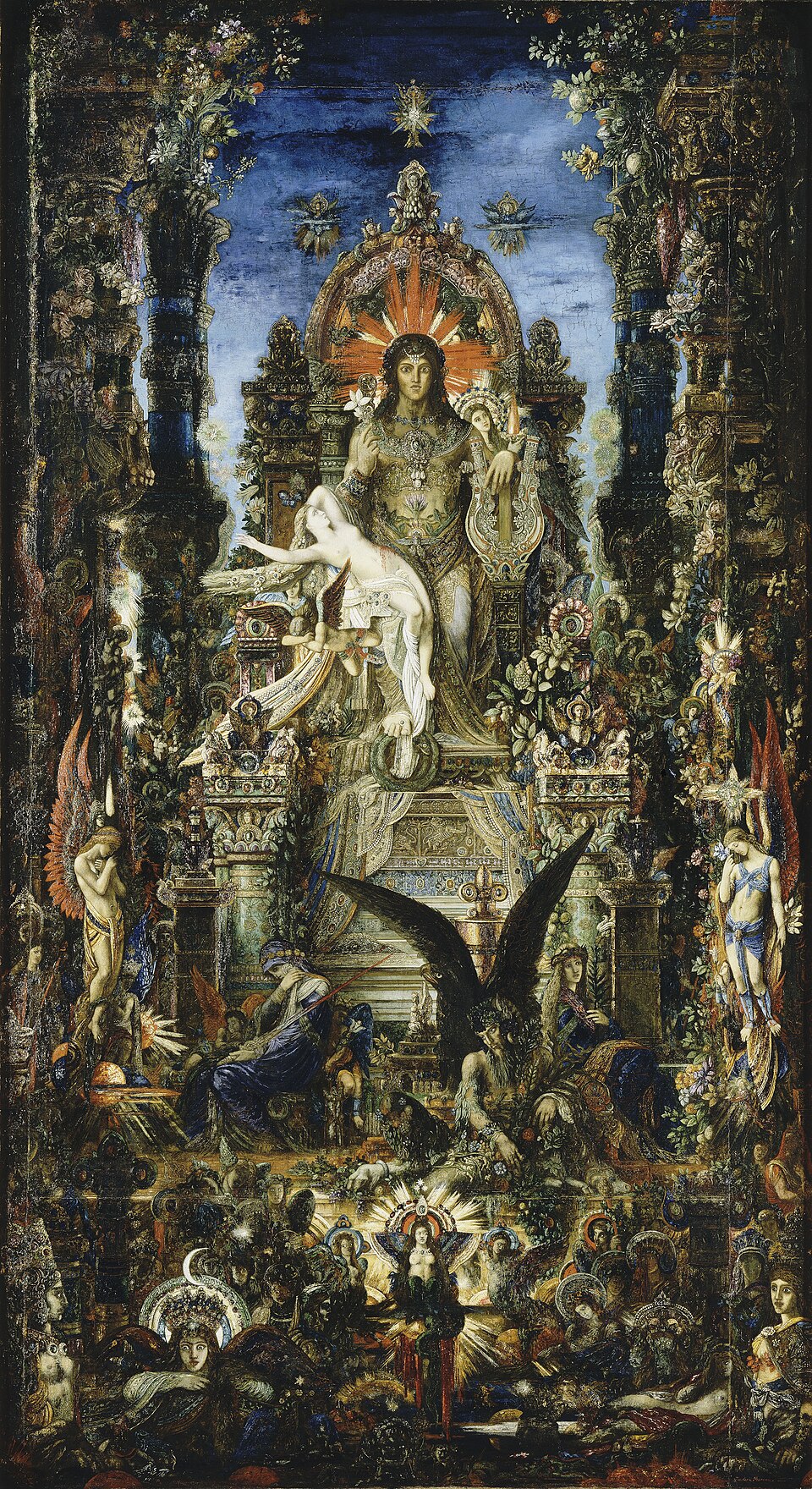
Gustave Moreau, "Jupiter and Semele" (1894 to 1895)
Gustave Moreau, "Jupiter and Semele" (1894 to 1895). Jeweled, airless, every surface an emblem.
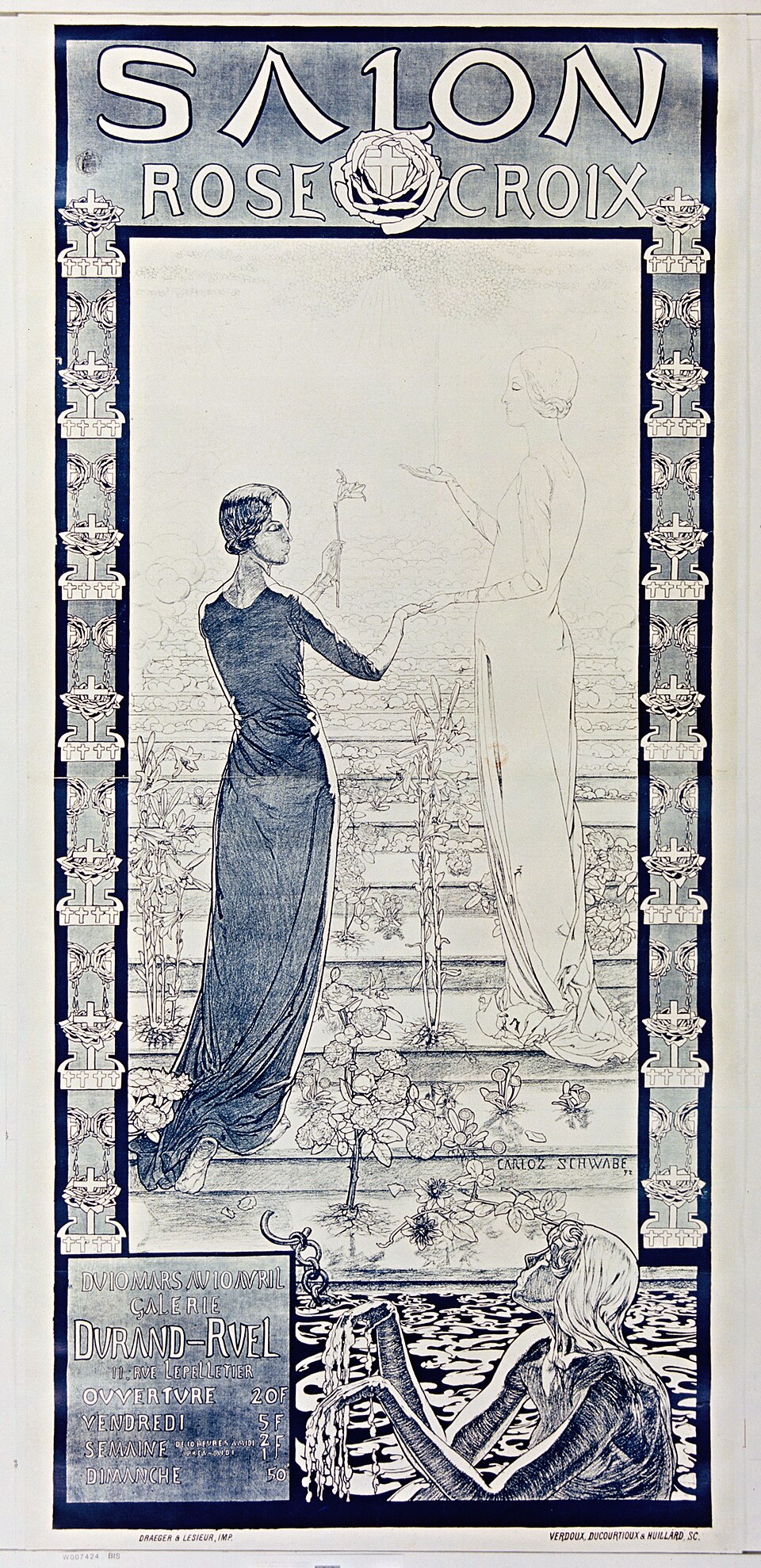
Carlos Schwabe, poster for the first Salon de la Rose+Croix (1892)
Carlos Schwabe, poster for the first Salon de la Rose+Croix (1892): esoteric art announced as graphic design.
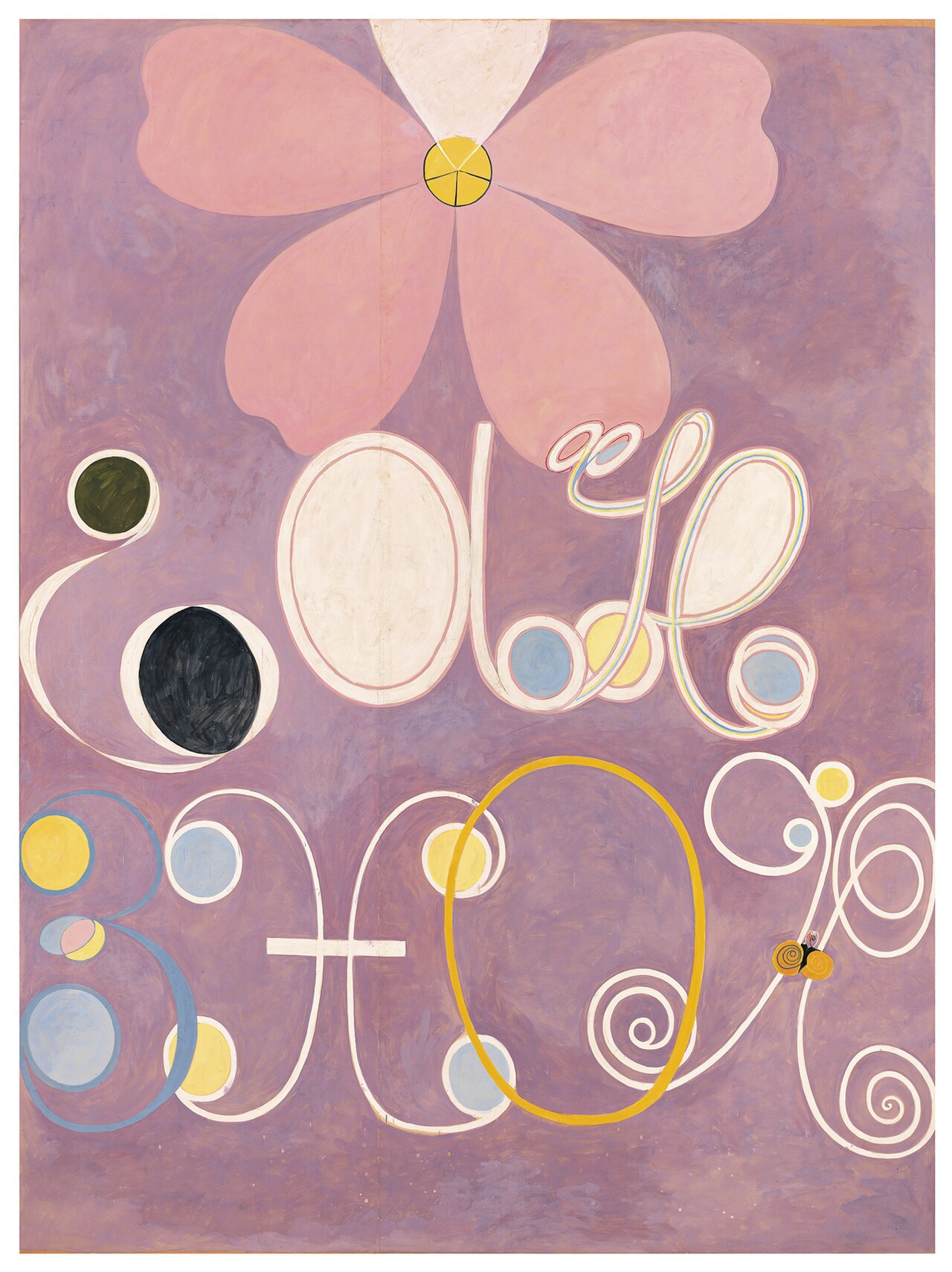
Hilma af Klint, "The Ten Largest, No
Hilma af Klint, "The Ten Largest, No. 5, Adulthood" (1907): stages of life as abstract biology and script.
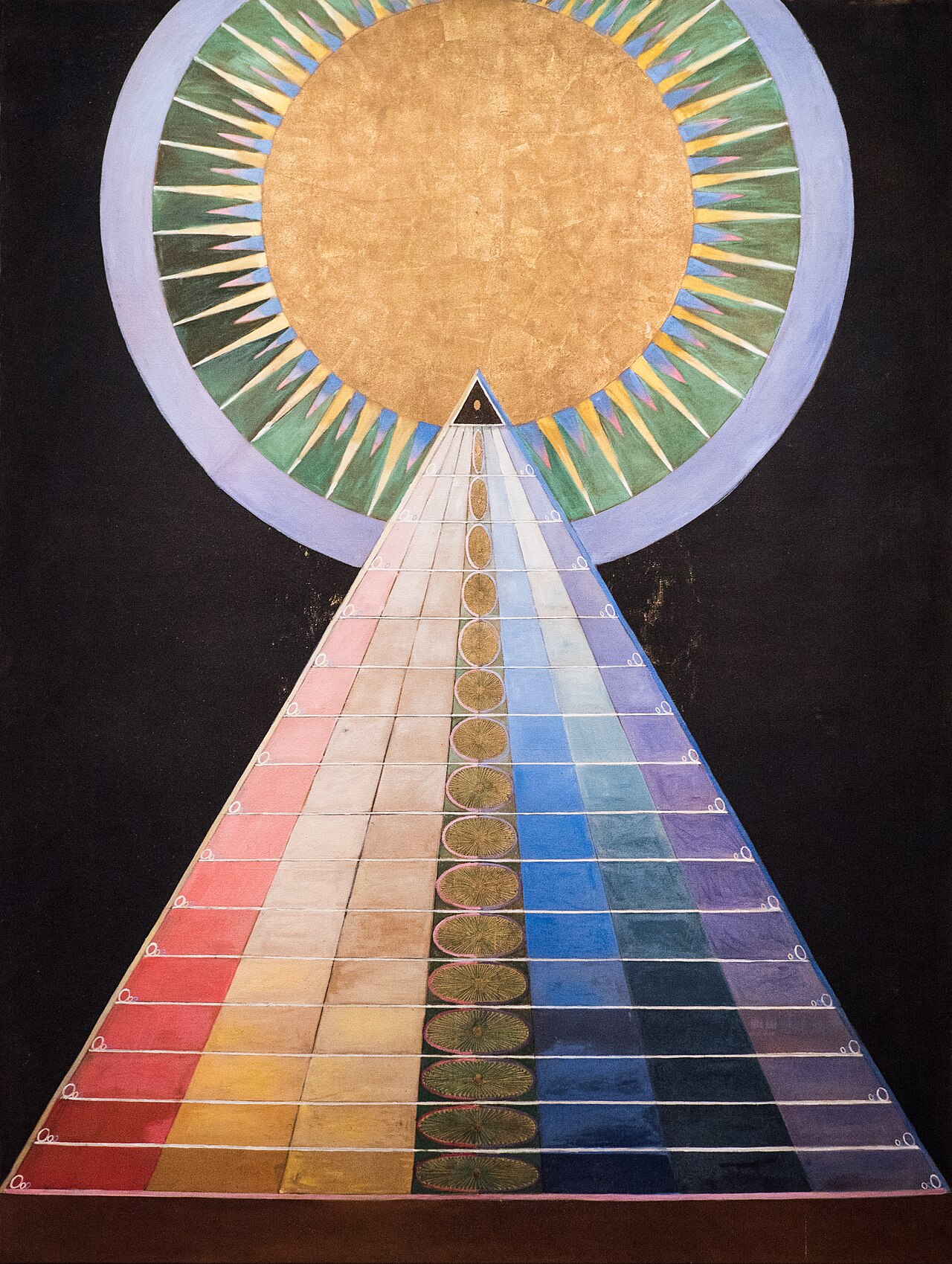
Hilma af Klint, "Altarpiece No
Hilma af Klint, "Altarpiece No. 1" (1915): the ascending triangle meets the sun disc; the last of the Paintings for the Temple.
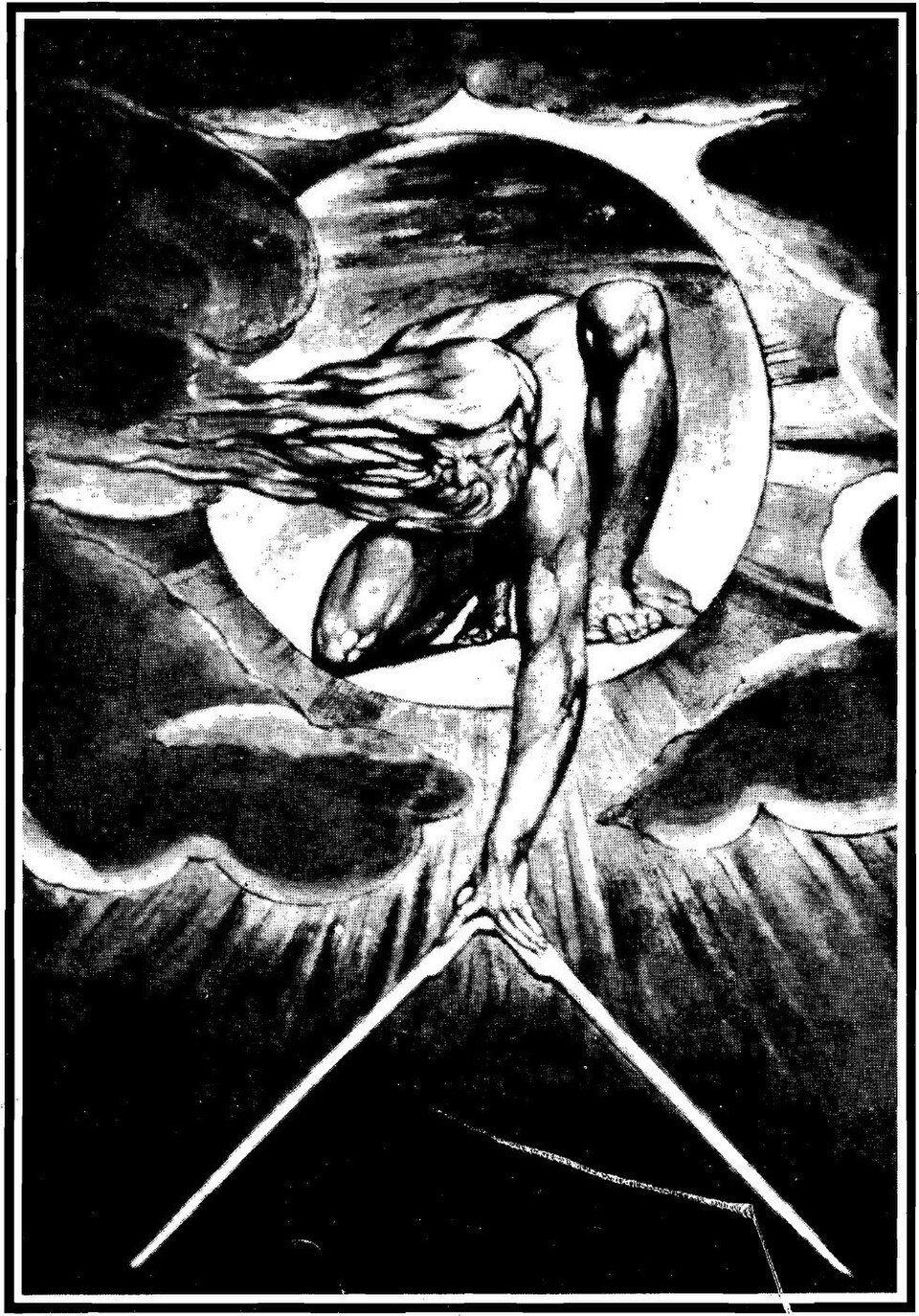
William Blake, "The Ancient of Days" (1794)
William Blake, "The Ancient of Days" (1794): the creator measuring the world with dividers. Blake is a Georgian-era visionary and a forerunner of Symbolism.

What it is doing

Design moves

Architecture
The temple that holds a cycle of works: af Klint imagined a spiral building for her paintings; Steiner built the Goetheanum. A building designed around one ordered sequence of images.
Painting
Diagrammatic abstraction: symbolic geometry plus hand-lettered words. Very large formats for the "life stages" scale. Mood through a narrow, saturated palette.
Sculpture
Fragmentary, dreamlike objects; pairing of opposite materials (black/white, matte/gilded).
Graphic design
The esoteric poster: tall format, decorative border carrying the meaning, a figure on a threshold or stair (Schwabe). Mallarmé's Un coup de dés (1897) is the first modern typographic layout: white space and type size as meaning.
Writing
Image-led prose and poetry, synesthetic description, repetition as incantation (Maeterlinck, Poe as read by Baudelaire and Mallarmé).

5a. Georgian: the country of Georgia

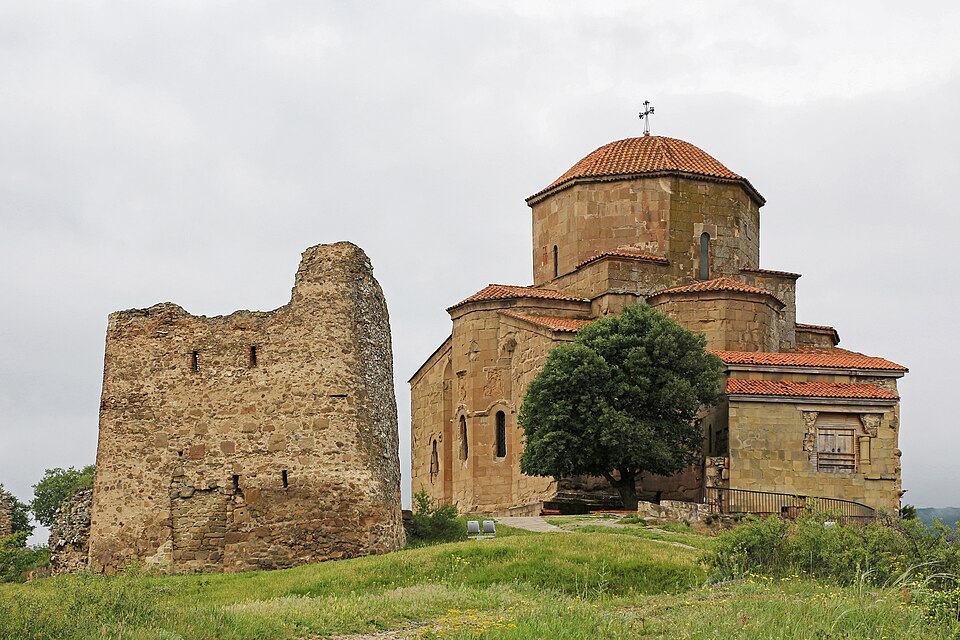
Jvari, Mtskheta (about 590 to 605)
Jvari, Mtskheta (about 590 to 605): a tetraconch, four equal apses around a square bay under a dome. One of the purest centralized plans anywhere.
Svetitskhoveli Cathedral, Mtskheta (1010 to 1029)
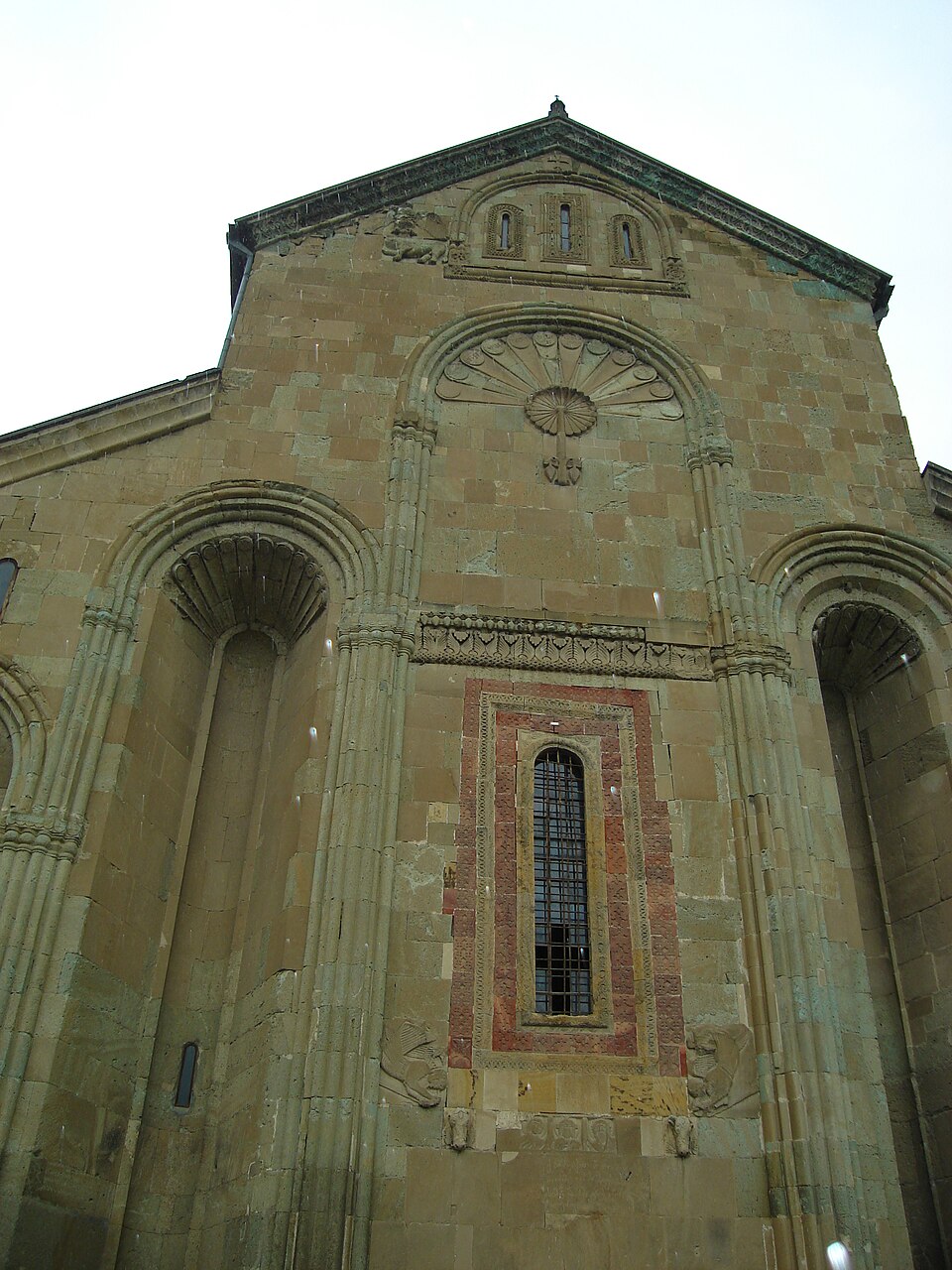
Svetitskhoveli Cathedral, Mtskheta (1010 to 1029): carved stone facades. The architect Arsukisdze is commemorated with a relief of the master's hand holding a square.
Asomtavruli inscription, Bolnisi Sioni (5th c
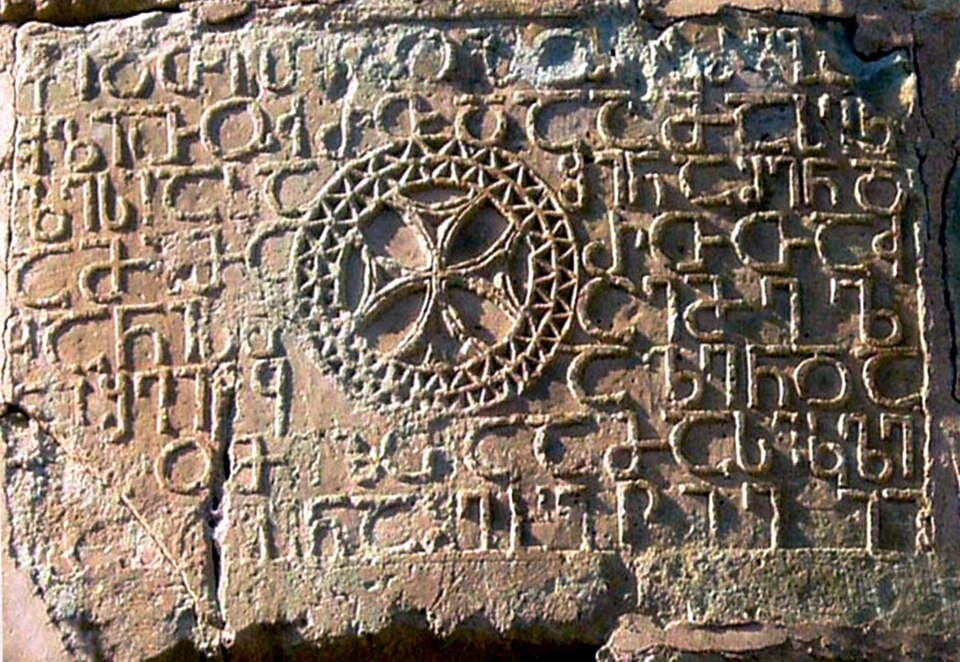
Asomtavruli inscription, Bolnisi Sioni (5th c.): the round, geometric first Georgian script, cut into stone.
Gelati Monastery apse (12th c
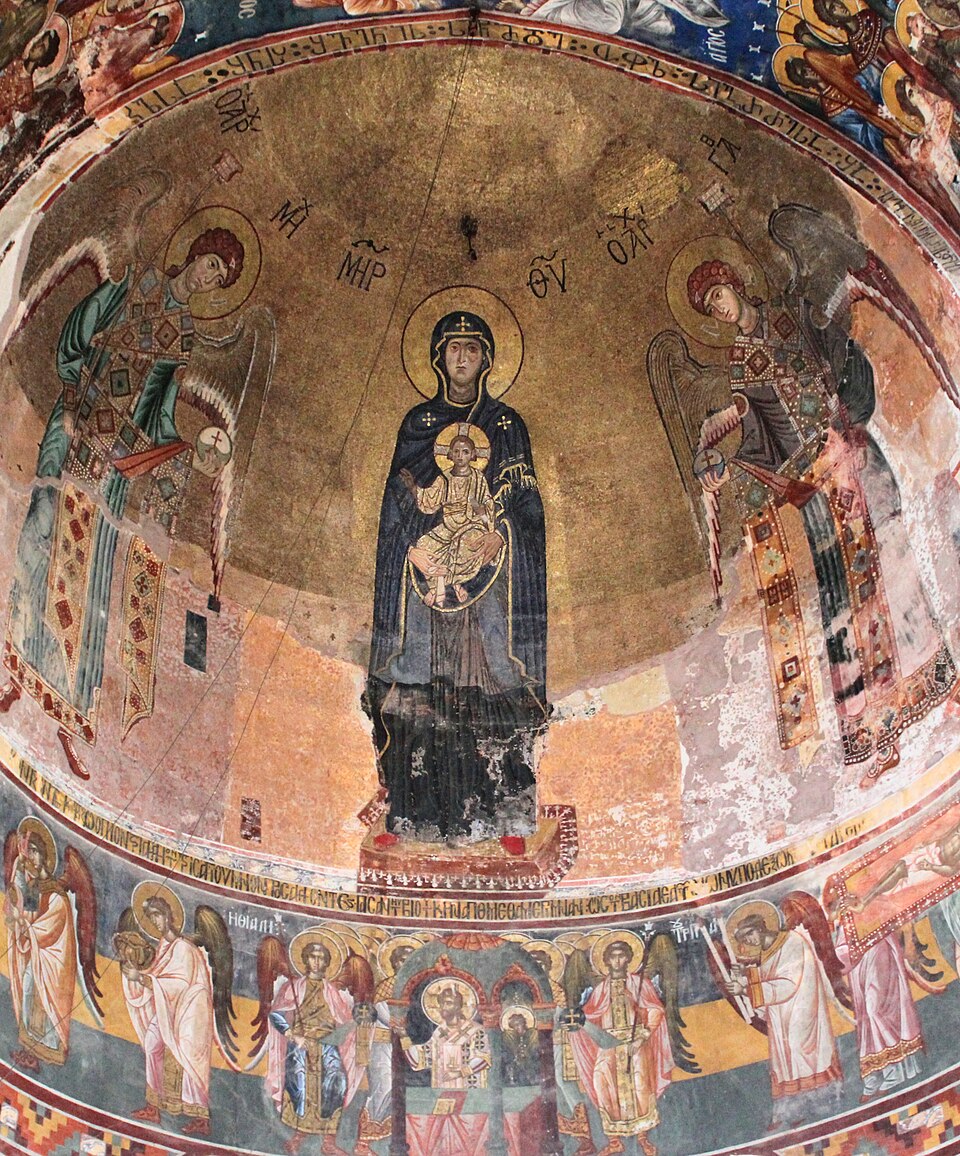
Gelati Monastery apse (12th c. mosaic, 16th c. murals): Byzantine gold ground in a Georgian Golden Age setting.
"The Knight in the Panther's Skin", Tavakalashvili manuscript (1646)
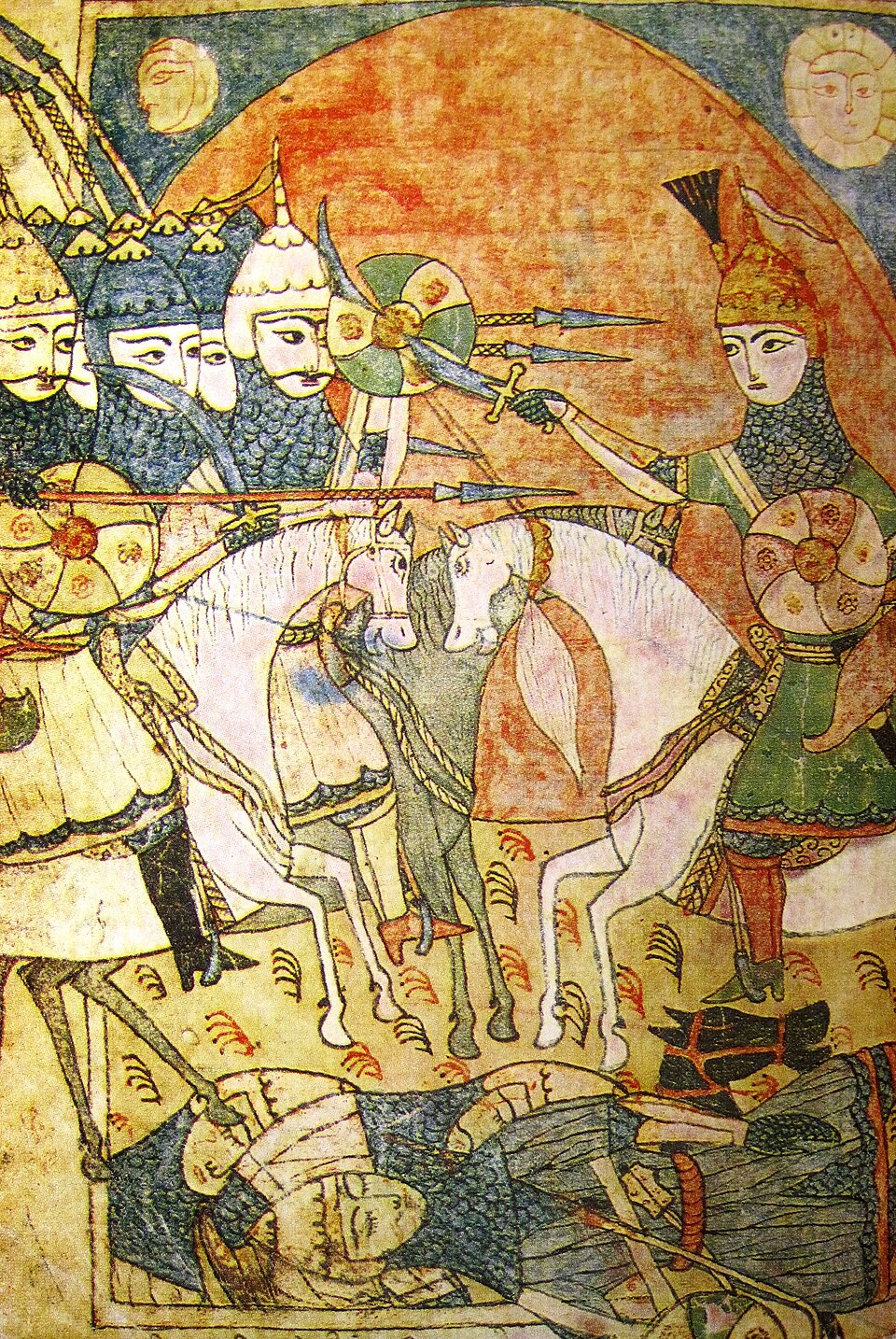
"The Knight in the Panther's Skin", Tavakalashvili manuscript (1646): Rustaveli's 12th c. epic, illustrated in a style shaped by Safavid Persian painting.
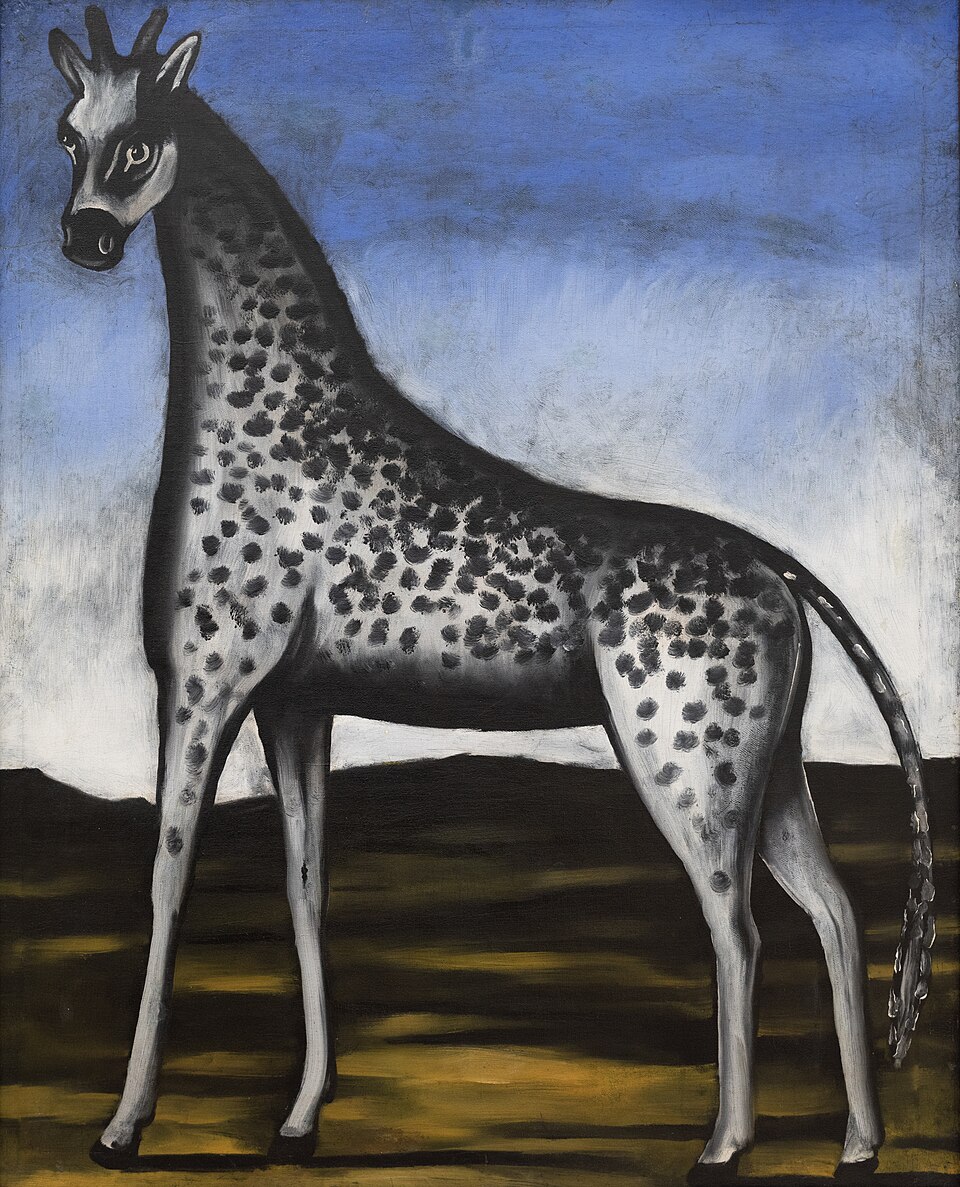
Niko Pirosmani, "Giraffe"
Niko Pirosmani, "Giraffe": Tiflis's self-taught painter, working on black oilcloth.

What it is doing

Design moves

Architecture
Compact, centralized volumes on a high site; the dome's drum as a lantern. Stone carving concentrated at windows and the east facade. The maker's tool as a symbol on the building itself.
Painting
Pirosmani's flatness: black ground, frontal animals and feasts, a direct folk monumentality.
Sculpture
Stone crosses and relief panels; ornament framing openings rather than covering walls.
Graphic design
Georgian script as geometric display type (asomtavruli, and mtavruli capitals); Rustaveli-manuscript page architecture: centered text block, colored frames, cinnabar initials at each stanza.
Writing
Rustaveli's epic of friendship and love across Arabia and India: a Christian poem in a Persian world, close to Nizami and to Sufi love poetry.

5b. Georgian: Georgian Britain (1714 to 1830)

Palladio, Villa Rotonda, from the Quattro Libri (1570)
Palladio, Villa Rotonda, from the Quattro Libri (1570). The square-and-circle villa that Georgian Palladianism copied (Chiswick House, 1729).
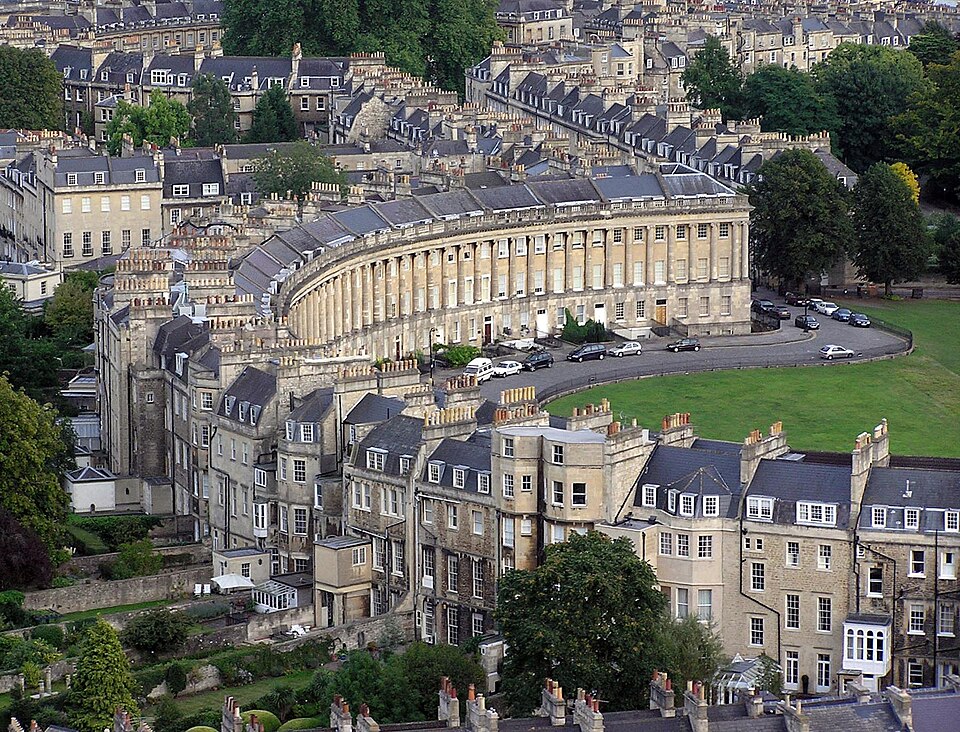
Bath from the air
Bath from the air: John Wood the Elder's Circus (begun 1754) and his son's Royal Crescent (1767 to 1774). Wood also wrote a book on Stonehenge (1747) and gave the Circus a frieze of emblems.
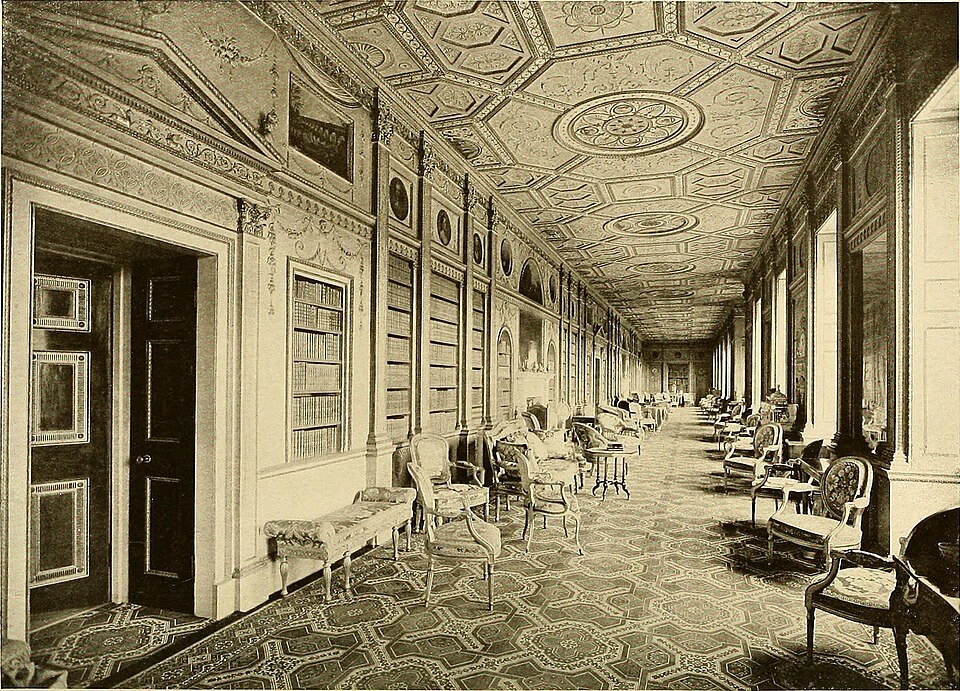
Robert Adam, Long Gallery, Syon House (1760s)
Robert Adam, Long Gallery, Syon House (1760s): proportion and repeating classical ornament as a calm, total interior.
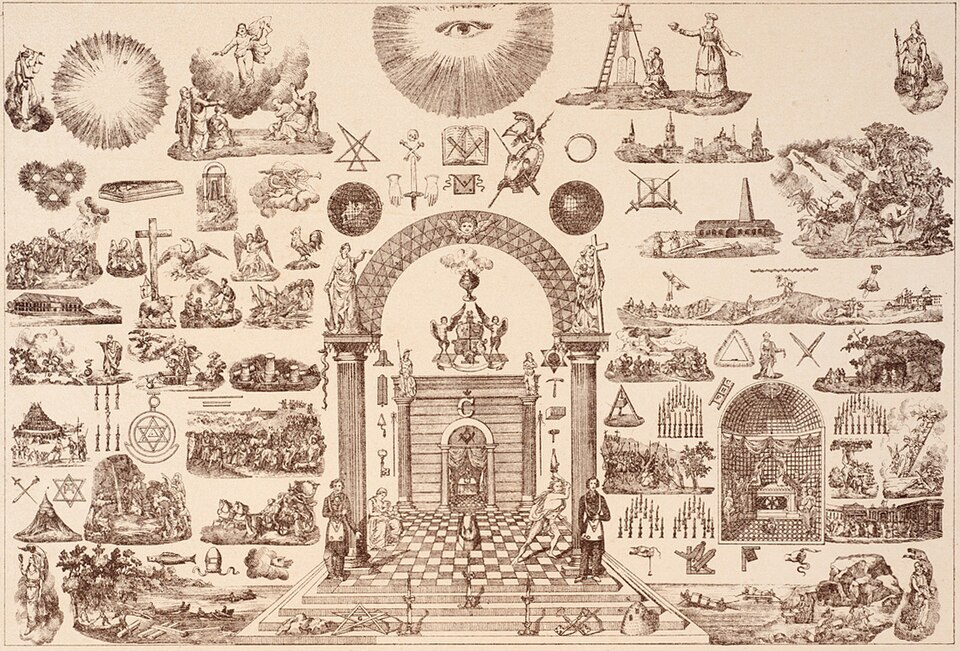
Masonic tracing board (later 19th c
Masonic tracing board (later 19th c. engraving). Organized Freemasonry began in Georgian London (Grand Lodge, 1717): compass, square, pillars and stair as a symbolic language of building.

What it is doing

Design moves

Architecture and interiors
Choose one ratio family per space and hold it everywhere (plan, windows, panels, furniture). Furniture of the period (painted pine, honest proportion) is the domestic version.
Painting and print
Blake's illuminated books: hand-etched text and image on one plate, printed and hand-colored by the author. The most complete artist's-book model in English.
Graphic design
Classical grids built from the same ratios (2:3 page, 1:√2 sheets, which is how ISO paper works). Emblem and seal vocabularies from Masonic engraving.

Cross-reference: tradition by discipline

TraditionArchitecturePaintingSculptureGraphic designLiterature
Islamic and sacred geometryMuqarnas, dome, screen, courtyardFlat infinite field, Monir's mirror worksModular relief, pierced and reflective surfacesTile-set pattern systems, square KuficRing composition, refrain
SufismStaged approach to a lit centerPersian miniature space, riddle imagesRotation, orbit, mirrorVoid-center circular layouts, nested framesFrame tales (Attar, Rumi), ghazal
JungAccretive house, oriented floor crossDaily mandalas, alchemical paletteCarved stone dialogueEmblem format, illuminated layoutsActive imagination, descent and return
Symbolism and af KlintTemple for a cycle of worksDiagrammatic abstraction, life-stage seriesPaired opposites in materialEsoteric poster, Mallarmé's pageCorrespondences, suggestion over naming
Georgia (Caucasus)Tetraconch, drum and domePirosmani's black groundIntegrated facade reliefAsomtavruli, manuscript framingRustaveli's epic
Georgian BritainPalladian ratios, Bath's circle and crescentBlake's illuminated booksClassical ornament as rhythmRatio grids, Masonic emblemsBlake, Swedenborg's correspondences

Reading list

Classical and sacred literature

Philosophy and esoteric texts

On the visual traditions

Use with care

Sources

Details without a linked source draw on general art-historical knowledge.

Image credits